Tuesday, July 28, 2015

Sontag On the Tyranny of Images

"Camera" by Hai Sam Nguyen on flickr
In On Photography, originally published in 1977, Susan Sontag offers incisive insights into the form and the mindsets and ways of being that photography engenders.  She astutely observes how, as a result of the “insatiability of the photographic eye,” photography as common practice essentially changes the way we relate to the world.  She observes how photographs, in their ubiquity as practice and presence, “teach us a new visual code” and, in essence, “alter and enlarge our notions of what is worth looking at” as well as profoundly altering our sense of “what we have a right to observe.”  She also notices how photographs alter our perception of scale of importance and of continuity.   All six essays in this volume are brilliant and cutting, but this post is focused on the opening section of the book, "In Plato's Cave" which would be a laudable choice as required reading for any adult in western society after the 1950s, when the relatively inexpensive accessibility of cameras and photo-sharing technologies (from the Kodak print, onward) so profoundly altered our perspective of reality so dramatically that most people are immune to any consciousness of the shift.  And this was before Facebook equated the image with one's personal status on a literal level. 

Sontag observes that part of the appeal of photography comes from its way of giving people “imaginary possession” of an “unreal past” while simultaneously helping people to “take possession of space in which they are insecure.” A habit of photography is “a way of refusing experience” by “limiting experience to a search for the photogenic.”
Consider this opening passage:
Humankind lingers unregenerately in Plato’s cave, still reveling, its age-old habit, in mere images of the truth.  But being educated by photographs is not like being educated by older, more artisanal images.  For one thing, there are a great many more images around, claiming our attention.  The inventory started in 1839 and since then just about everything has been photographed, or so it seems.  This very insatiability of the photographing eye changes the terms of confinement in the cave, our world.  In teaching us a new visual code, photographs alter  and enlarge our notions of what is worth looking at and what we have a right to observes.  They are a grammar and, even more importantly, an ethics of seeing.

I wonder about the degree to which my sense of being is shaped by photographs, but I suspect that thinking about this is a little bit like asking a fish how the water feels.  

Unlike with more “artisanal” forms of representation, photographs are often treated as “narrowly selective interpretation[s]” or “evidence.” There is a built in bias to equate photographic images with “truth,” even if we know better, understanding that “photographs are as much an interpretation of the world as paintings and drawings are.”

One particularly interesting observation that Sontag shares involves the way that “there is an aggression implicit in every use of the camera.” Considering this in light of the ubiquity of cheap, universally accessible, photographic technology, the implications of this certainly give pause.  Add to this, other mindsets prevalent in an increasingly complex, modern society.  Consider the insatiable tendency to document, photograph, to the point that “it hardly matters what activities are taken so long as photographs get taken and are cherished” (remember, in 1977, Kodak business was booming, and Sontag is still referring to print images: those endlessly collectible, handed down, and passed around artifacts taken, for the most part as representations of past events and people as they once were.  Photographs essentially “help people to take possession of space in which they are insecure.” I can only imagine that the effects Sontag describes are magnified now.  I cannot help but juxtapose the increased call for “mindfulness” and training people to “be present” with the reality of living in a world where, according to Sontag’s argument, “a way of certifying experience, taking photographs is also a way of refusing it - my limiting experience to a search for the photogenic, by converting experience into an image, a souvenir.” Experience becomes shaped by a mindset of “stop, take a picture, move on,” where travel becomes a strategic way to collect more photographs.  And consider, this is before Facebook, when one’s status and identity is literally (as opposed to metaphorically, as followers of Sontag may have it may have been more likely to observe) linked to ones photographs.

Another strong observation Sontag delivers involves the connection between photography and nostalgia:
It is a nostalgic time right now, and photographs actively promote nostalgia.  Photography is an elegiac art, a twilight art. Most subjects are, just by virtue of being photographed, touched with pathos… to take a photograph is to participate in another person’s mortality, vulnerability, mutability. Precisely by slicing out this moment and freezing it, all photographs testify to time’s relentless melt. 

Sontag thoughtfully considers the capacity of photographs to raise awareness of injustices in such a way that people are moved to action.

In the vein of exploring the capacity of photographs to elicit emotional outrage, shock, or other feeling, she observes that “photographs shock insofar as they show something novel. Unfortunately, the ante keeps getting raised - partly through the very proliferation of such images of horror.” She goes on to hauntingly give voice to the peculiarly modern “negative epiphany” of being “stunned by an artifact from the “photographic inventory of ultimate horror.”  As she recalls her own experience upon first encountering photographs of Bergen-Belsen and Dachau in 1945, at the age of twelve.  Its an experience, like much of what she catalogues in this essay, so common that it might easily go overlooked - perhaps mores now, over three decades later, when the photographs often arrived unbidden, with even greater and more constant velocity, through many more available livestreams.  If one wanted to avoid them, it would be difficult to discern where or where not to look.  

"Sailor, Uniform" by Beryl_snw on flickr
I recall a similar feeling of helplessness upon my first encounter with similar images.  I am hard pressed to say which came first: the children with swollen bellies in Ethiopia, the child running from the destruction of Hanoi, or a black and white image of concentration camp victims, or the piles of corpses in mass graves.  I recall a series of days of being ill with certain dizziness and weakness after witnessing some particular images of Nazi concentration camps when I was seven, which fortunately my mother did not ask me to explain.  It was a double-edged horror: of the destruction and degradation I had seen in the photographs, with the sense that the adults around me had all seen it before, and so adulthood was in part a matter of getting used to certain degrees of horror while maintaining a sort of ironic detachment from it all.  I had a strong suspicion - which from time to time bubbled into utter fear and despair - that I did not have it in me to do so, and therefore was not qualified to live and act in this world as a functional adult - a state that seemed, even in my earliest memories, to be ever-present and waiting for me just around the corner.  How on earth would I ever make it? I was no stranger to heartbreak, sadness, and even horror on the immediate scale, but how was I supposed to grow into the sort of person who could witness large-scale, calculated, devastating horror on the level of the images of Dachau and still manage to be the person who offered guests cheese and crackers, and remembered to bathe, and pay the electric bill, and polish one’s Sunday shoes?  How was that supposed to be managed?  As Sontag recalls her own initiation into photographic horror, “a part of my feelings started to tighten; something went dead, something is still crying.”  There’s a peculiar degree to which the photographic images presents horror outside of its context, such that the witness is forced to witness while being prevented from taking some immediate action.  The horror is in a sense magnified, because it can be examined in a way that horror rarely can be when it is lived: often, the urgency of survival in such situations is so great that it has the effect of mitigating existential contemplation of the event.

One way of dealing with this angst, Sontag eerily reminds, is by growing accustomed to the horror.  One learns to adapt to it, and the effect is lessened.  Exposure to suffering is profoundly different from exposure to photographic images of suffering, because the photographic image “does not necessarily strengthen conscience and the ability to be compassionate. It can also corrupt them… Images anaesthetize. An event known through photographs certainly becomes more real than it would have been if one had not seen the photographs - think of the Vietnam War… But after repeated exposure to images it also becomes less real.  

As a result of living in a world where photographic images of horror are increasingly prevalent, citizens of this world develop a “certain familiarity with atrocity, making the horrible seem more ordinary.” It is possible, she argues, that after a certain “saturation point” had been reached (as she believed it had, by the late 1970s) such that “‘concerned’ photography” published after saturation “has done at least as much to deaden conscience as to arouse it.”

In the concluding sections of this powerful piece, the writer relates the following:

Photography implies that we know about the world if we accept it as the camera records it.  But this is the opposite of understanding, which starts from not accepting the world as it looks.

The omnipresence of photographs has an incalculable effect on our ethical sensibility. By furnishing this already crowded world with a duplicate one of images, photography makes us feel that the world is more available than it really is.
Needing to have reality confirmed and experience enhanced by photographs is an aesthetic consumerism to which everyone is now addicted. Industrial societies turn their citizens into image-junkies; it is the most irresistible form of mental pollution.

Today, everything exists to end in a photograph.


Tuesday, July 21, 2015

In Times of Trouble, Words of Wisdom

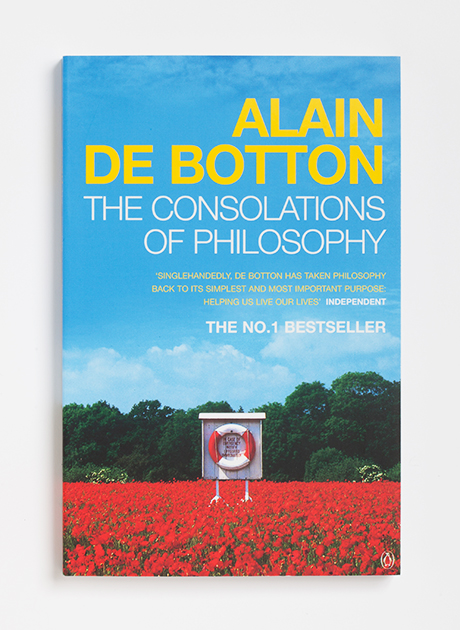
For anyone who has ever longed, in the live-tweeting age of Instagram, snap chat, selfie sticks, reality-television housewives and lawsuits over the heat of freshly-brewed coffee, for a dose of something more serious and substantial, Alain de Botton is a good friend to know.  I had the sense when I first picked up his The Consolations of Philosophy, a few weeks ago, that I had encountered the author before.  My hunch was confirmed with a quick google search; it was a 2013 On Being interview with Krista Tippett, which I remember hearing at some pre-dawn hour during a Saturday morning run, in which he discussed his motivations for founding the School of Life in London, which he describes as a church for atheists.  I was moved by the talk and by de Botton’s earnest search for truth and meaning beyond the world currently taken as “secular” while also resisting the dogmas of religion.  His soulful sensibility and earnest searching is perhaps most efficiently conveyed by a survey of the titles of his books.  These include, in addition to The Consolations of Philosophy: The Art of Travel, Status Anxiety, On Love (a novel), Essays in Love,  The Architecture of Happiness, How Proust Can Change Your Life, The Pleasures and Sorrows of Work, Religion for Atheists: A Nonbeliever's Guide to The Uses of Religion, The News: A User’s Manual, How to Think More About Sex, A Week at the Airport, The Romantic Movement: Sex, Shopping, and The Novel, On Seeing and Noticing, and Art as Therapy: From the Collection of The National Gallery at Victoria.  

In The Consolations of Philosophy, Alain de Botton parses wisdom of the ages for everyday living, with searching questions and endearing wit. Let’s face it, a book that dares to attempt to distill wisdom of teachings of philosophers as diverse and wide ranging as Socrates, Epicurus, Seneca, Montaigne, Schopenhauer, and Nietzsche - could easily become a litany of trite superficial distillations of profound truths.  De Botton’s volume is fresh and meaningful because he is not trying to simplify the oeuvre of any of the characters in his enlightening discussion.  Rather, he looks to them sincerely as wise elders, searching the teachings of each for clues that may help him to address a very specific and personal problem.  His honesty is endearing, while affording the reader with a fresh lens by which to examine each thinker.  

He reads with an eye for aiding and addressing particular human blights, and organizes his chapters around them, pairing each with a philosopher whose message offers complex varieties of consolation around the theme at hand.  For “Unpopularity,” he turns to Socrates, for “Not Having Enough Money,” Epicurus, Seneca on “Frustrations,” Montaigne on “Inadequacy,” Schopenhauer for “A Broken Heart,” and finally, to Nietzsche for “Difficulties” in general.

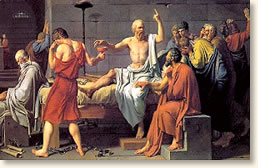
De Botton begins by narrating his experience of being in “a deserted gallery on the upper level of the Metropolitan Museum of Art" on his way to find a container of his favorite chocolate milk before heading back home to London, and being struck by Jacques-Louis David’s 1786 painting, The Death of Socrates.

As he contemplates the work, de Botton observes how “the subject of which the Greek philosopher was the supreme symbol seemed to offer an invitation to take on a task at once profound and laughable: to become wise through philosophy.”  The author elaborates with explanation of his desire to profile treasured insights of diverse philosophers across time:
Jacques Louis David's The Death of Socrates
In spite of vast differences between the many thinkers described as philosophers across time (people in actuality so diverse that had they been gathered together at a giant cocktail party, they would not only have had nothing to say to one another, but would most probably have come to blows after a few drinks), it seemed possible to discern a small group of men, separated by centuries, sharing a loose allegiance to a vision of philosophy suggested by the Greek etymology of the word - philo, love; sophia, wisdom - a group bound by common interest in saying a few consoling and practical things about the causes of our greatest griefs.  It was to these men I would turn.

Also in the opening, he explains his rationale for desiring to cultivate philosophical habits of thought, supported by an illustration of two artifacts of pottery, side by side: one which could easily be found in a museum, the other which appears to have been sculpted by a distracted three-year-old with borderline ADHD who has possibly been sipping a bit too much of his grandfather’s scotch. In this vein, de Botton observes:
“Unfortunately, unlike in pottery, it is initially extremely hard to tell a good product of thought from a poor one.” 
This strikes me as particularly applicable to the times at hand, which seem often to consist of a number of well-oiled and handsomely coiffed and manicured mouthpieces eager to spout off knee-jerk opinions in equally well-manicured rhetoric devoid of apparent flaw even if it is all bunk. For this, de Botton offers this explanation:
A bad thought delivered authoritatively, though without evidence of how it was put together, can for a time carry all the weight of a sound one.  Bit we acquire a misplaced respect for others when we concentrate solely on their conclusions - which is why Socrates urged us to dwell on the logic they used to reach them.
Oh, Socrates.  What debts we owe you, for showing, at expense of your life, how humans will predictably prefer doctrine and custom over truth, and how ignorance, when propagated efficiently en masse, tends to win, over and over again.  You drank hemlock, and even the guards wept.  Your wife, Xanthippe, had to be carried out over the scene she was making, but who could blame her?  She was simply voicing what everyone felt.  “This cannot happen!  Look at this injustice!  See it and be moved!”  We see it, we are moved, but it exists anyway. We sigh, we drink, we look ahead in resignation.  It can happen, and does, over and over again, world without end.  Only the purest lambs among us can still weep in indignation.  Still, there is comfort in knowing that this is how things are.  

For daring to offer that happiness may be found in doing good (a position which placed him in stark opposition to Polos who argued that dictators were revered by masses), Socrates was tried by a biased jury and received the death sentence.  In the last public argument of his life, he offered this:
If you put me to death you may not easily find anyone to take my place…
From the life of Socrates, de Botton offers “a way out of two powerful delusions: that we should always or never listen to the dictates of public opinion.  To follow his example, we will best be rewarded if we strive instead to listen always to the dictates of reason." 

For the chapter, “Consolation for Not Having Enough Money,” de Botton begins with “Happiness, an acquisition list,” which includes the trappings of great villas, impressive acquisitions, and - for the book lovers among us - “A library with a large desk, a fireplace, and a view onto a garden.”  He then contrasts these with the ideas of happiness espoused by Epicurus - a thinker whom, until I read this volume, I mainly associated with justification for gluttony and orgies.

I have learned that I am not alone in this error. Epicurus, on the importance of sensual pleasure, is often misunderstood.  He is widely known for observing how “pleasure is the beginning and the goal of the happy life” and he publicly confessed “his love of excellent food,” for, as he aptly observed, “the beginning and root of every good pleasure is the pleasure of the stomach.  Even wisdom and culture must be referred to this.”  And, perhaps one of my favorite observations, exemplary of de Botton’s keen sensibilities, how, “philosophy properly performed was nothing less than a guide to pleasure.” Here it becomes easy to see where interpretation of Epicurean thought veered into justification for a narcissism and gluttony that Epicurus himself never would have lived or endorsed.   

So it is surprising (and refreshing in a food culture that is often over-hyped, overdone, and a bit too gourmet) to learn that for Epicurus, food was simple. As de Botton clarifies:
  He drank water rather than wine,and was happy with a dinner of bread, vegetables, and a palmful of olives. ‘Send me a pot of cheese, so that I may have a feast whenever I like,’ he asked a friend.  Such were the tastes of a man who had described pleasure as the purpose of life.
…He had not meant to deceive.  His devotion to pleasure was far greater than even the orgy accusers could have imagined. It was just that after rational analysis, he had come to some striking conclusions about what actually made life pleasurable - and fortunately for those lacking a large income, it seemed tat the essential ingredients of pleasure, however elusive, were not very expensive.
De Botton goes onto carefully detail these: Friendship ("Before you eat or drink anything, consider carefully who you eat or drink with rather than what you eat or drink: for feeding without a friend is like the life of the lion or the wolf.”), Freedom (he and his friends bought a house together, grew their own vegetables, and lived on what would today be called a commune, where they shared responsibilities and lived simply), and Thought (chiefly for developing the ability to distinguish what is natural and necessary from that which is unnatural and unnecessary.  It is precisely the lack of sufficient thought, de Botton observes, which is at the heart of so much of today’s unhappiness even in the face of relative material abundance.  As de Botton notes, “our weak understanding of our needs is aggravated by what Epicurus termed the ‘idle opinions’ of those around us, which do not reflect the natural hierarchy of our needs…” while advertisers work to exploit our longing for forgotten needs (friendship, freedom) to tempt us towards desire for unnecessary things (fancy aperitif sounds good when the real craving is friendship, longing for a Jeep may be the manifestation of a desire for freedom).

Peter-Paul Rubens' Seneca
To address "Frustrations," deBotton looks to Seneca, opening with examination of the circumstances surrounding the philosopher’s death in Rome in April A.D. 65. Basically, the twenty-eight year old Emperor Nero had uncovered a conspiracy to unseat him from the throne, and was on a rampage executing (mainly by feeding to lions and crocodiles) anybody that he suspected to be in on it, including his half brother Britannicus, his mother Agrippa and wife, Octavia, a large number of senators, and eventually also his tutor, Seneca. The philosopher’s friends and followers were beside themselves with agonized grief and impotent rage at this injustice.  Seneca reminded them here, to consider the logic of the situation (as provided via an account by Tacitus):
Where had their philosophy gone, he asked, and that resolution against impending misfortunes which they had encouraged in each other over so many years? ‘Surely nobody was unaware that Nero was cruel!’ he added. ‘After murdering his mother and brother, it only remained for him to kill his teacher and tutor.’
For de Botton, this account serves as an example of Seneca’s characteristic ability to meet “reality’s shocking demands” with well-honed stoic dignity, which he no doubt had opportunity to cultivate throughout a lifetime of bearing witness to such disasters as the earthquakes that shattered Pompeii, the burning of Rome and Lugdunum, the violent tyranny of Nero’s murderous reign, contraction of tuberculosis which sidelined his political aspirations, and subsequent onset of suicidal depression, and - as a result of a plot by the Empress Messalina which resulted in his disgrace - eight years of exile on the Island of Corsica. All of this, de Botton eloquently observes, afforded the philosopher “a comprehensive dictionary of frustration, his intellect a series of responses to [his experiences]”  which result in a deep understanding of a critical truth: that “the sources of our satisfaction lie beyond our control and that the world does not reliably conform to our desires.” For Seneca, achievement of wisdom lies not in circumventing this (you can’t), but in “learning not to aggravate the world’s obstinacy through our own responses, through spasms of rage, self-pity, anxiety, bitterness, self-righteousness, and paranoia.”  It reminds me of the best of realizations that I have sometimes read, from survivors of rape, cancer, abuse, and other traumas. At some point the would be victim changes the lens and the singular focus that would have relegated them forever to victim status- namely, the tendency to cry, “Why me?”  - and the response becomes instead, “Why not me?” upon consideration of the large numbers of people facing similar ills. The knowledge seems to have the effect of removing the single greatest stumbling block to further progress, which is precisely the tendency to react by wallowing in any of the unwanted responses describe above.  When you take away rage, self-pity, bitterness, and the like - what is left but to accept and move on?  Yes, of course, there is the issue of anger, and much of this righteous, but what to do with it?  Seneca observed, “There is no swifter way to insanity…” In his view, the primary cause of anger results from holding onto “dangerously optimistic notions about what the world and other people are like.” In short, “we will cease to be so angry once we cease to be so hopeful.” 

As I write the line above, I can imagine, that if this post had more readers, surely some would be aghast at the notion.  I’ve committed blasphemy by this acknowledgment that, after all, maybe it is true that even though anything is possible, everything is not.  In an age of “Believe it, achieve it!” the notion of moderating one’s expectations may be a tough pill to swallow.  Which is, one might observe in a vein of practicality, why it is called a pill and not something other, like a hot buttered crust of bread.  We have to live here, and if we’re fortunate in the Epicurean sense, from time to time we’ll get to love the process.  But, let’s face it, Seneca reminds, we don’t get to make up the rules of the game. “An animal,” Seneca observed, “struggling against the noose, tightens it… the only alleviation for overwhelming evils is to endure and bow to necessity.” 

For "Consolation for Inadequacy," turn to Michel de Montaigne of the wooded hills in south-western France, circa the mid 1500s.

Montaigne observed “how far we were from the rational, serene creatures whom most of the ancient thinkers had taken us to be,” proposing that we were “for the most part hysterical and demented, gross and agitated souls beside whom animals were in many respect paragons of health and virtue - an unfortunate reality which philosophy was obliged to reflect, but rarely did: ‘Our life consists partly in madness, partly in wisdom…’” 

From this he turns to a tender and personal reflection on the particular emotional and spiritual pitfalls of sexual inadequacy, and onto cultural inadequacy borne of the “speed and arrogance with which people seem to divide the world into two camps, the camp of the normal and that of the abnormal.  Further still, to chart the waters of intellectual inadequacy, borne of certain “leading assumptions about what it takes to be a clever person” contrasting with the philosopher’s own personal distaste fore certain revered books which induced immediate bouts of deep sleep.  He urged writing with simplicity, observing how there is “no legitimate reason why books in the humanities should be difficult or boring,” and reminded how such simplicity, naked of adornment, demanded courage, such as that exhibited by Socrates in his dirty cloak, speaking in his plain language, whose humble style is so easy to forget when presented in the sleek prose of his faithful student, Plato, for it seems, observes Montaigne, “we can appreciate no graces which are not pointed, inflated, and magnified by artifice… such graces as flow on under the name of naivety and simplicity readily go unseen by so course an insight as ours…”  Simplemindedness may not be so bad, after all.  

Onto the theme of "A Broken Heart," and the entrance of Arthur Schopenhauer, who seems, from an early age, born to despair.  He had enough wealth that he did not have to work (though it must be noted that this was inherited only after his father’s suicide, which happened when the young Arthur was 17), he attended an English boarding school, and confessed to be preoccupied with mulling over human misery.  When he finally relaxes, on a European tour following the completion of a masterpiece of a book, The World as Will and Representation, which some critics take as explanation for the young man’s lack of friends- and attempts to entertain the company of a number of young ladies, he is categorically rejected by all.  With few moments of reprieve, rejections by the objects of his affections becomes a running theme, and by his mid-forties he mainly keeps company with “a succession of poodles, who he feels have a gentleness and humility humans lack”. He appears to survive by maintenance of a strict routine: three hours of writing every morning, followed by flute-playing for an hour, after which he “dresses in white tie for lunch in the Englischer Hof on the Rossmarket” where he is described as “comically disgruntled, but harmless and good-naturedly gruff.”  Despite the warnings of his mother that “it is not good” he regularly goes for months without leaving his room.

Arthur Schopenhauer
As he nears his sixties, Schopenhauer gains more attention from women and men alike, and his views towards women soften somewhat.  Still, at the time of his death in 1860, at the age of seventy-two, he is firmly convinced that “human existence is a kind of error.”

De Botton observes how Schopenhauer’s particular brand of pessimism is may offer some useful consolation when it comes to matters of the heart, and the section he devotes to exploring how is particularly memorable.  

As he puzzled over the peculiar pangs of love, Schopenhauer concluded that the lover is beset by a temporary insanity fueled by an instinctual pull to create the next generation.  For this reason, one is pulled strongly towards a potential mate for reasons that often make no logical sense, and likewise, lukewarm or cool around people who are perfectly acceptable companions when the details of their persons are considered but for whom there is no particular spark.  

As de Botton observes, this analysis “surely violates rational self-image, but at least it counters suggestions that romantic love is an avoidable departure from more serious tasks… by conceiving of love as biologically inevitable, Schopenhauer’s theory of the will invites us to adopt a more forgiving stance towards the eccentric behavior to which love so often makes us subject.”

The strange mystery of “Why him?” or “Why her?” is for Schopenhauer a matter of instinct.  Namely, “we are not free to fall in love with everyone because we cannot produce healthy children with everyone… our will to life drives us towards people who will raise out chances of producing beautiful and intelligent offspring, and repulses us away from those who lower these same chances.”

The philosopher also concludes, bleakly, [in de Botton’s interpretation] that “the person who is highly suitable for our child is almost never (though we cannot realize it at the time because we have been blindfolded by the will-to-life) very suitable for us.”

To those who would offer exceptions to this rule, Schopenhauer would respond, “that convenience and passionate love should go hand in hand is the rarest stroke of good fortune.”

In short, as Schopenhauer regarded intense coupling, “The coming generation is provided for at the expense of the present.”

While many may no doubt find such views a bit severe, and perhaps colored by the author’s own ill-fate in love, it’s hard not to notice how they offer a sort of consolation in the vein of Seneca’s stoic acceptance, a reminder of how often human expectations for what will and should be are at odds with how they are. 

"Consolation for Difficulties," featuring Nietzsche, brilliantly opens with this passage:
Few philosophers have thought highly of feeling wretched. A wise life has traditionally been associated with an attempt to reduce suffering: anxiety, despair, anger, self-contempt and heartache.
Then again, pointed out Friedrich Nietzsche, the majority of philosophers have always been ‘cabbage-heads.’

Nietzsche seems born for his particular brand of thinking, concluding relatively early in his scholarly life, influenced heavily by the work of Schopenhauer, that the greatest suffering is caused by pleasure-seeking; better to simply, through abstinence, aim to mitigate pain by embracing some measure of the inevitable discomfort of living. The goal here is obviously not enjoyment, but to preserve some measure of sanity which for Nietzsche is at odds with attempts to gain pleasure.  
“the harder we try to enjoy [life], the more enslaved we are by it, and so we [should] discard the goods of life and practice abstinence.”

This is not to imply that the philosopher successfully followed his own advice consistently (his death results from an unfortunate case of syphilis most certainly contracted in a Cologne brothel).  Periods of apparent simplicity and abstinence were frequently interrupted by violent pinnings for women who consistently rejected him - perhaps on account of the large mustache he wore, which appeared like the pelt of a small mammal, or perhaps because he was often painfully shy. 

As his thinking developed, so did a deep understanding of the inextricable link between joy and pain, pleasure and displeasure.
What if pleasure and displeasure were so tied together that whoever wanted to have as much as possible of one must also have as much as possible of the other… you have the choice: either as little displeasure as possible, painlessness in brief… or as much displeasure as possible as the price for the growth of an abundance of subtle pleasures and joys that have rarely been relished yet? If you decide for the former and desire to diminish and lower the level of human pain, you also have to diminish and lower the level of their capacity for joy.

Very much a philosopher “of the mountains,” (for seven summers, he rented a cheap room in the mountains of southeastern Switzerland, which he felt to be “his real home.”) Nietzsche drew an analogy from his favorite surroundings to support his view on the duality of human experience:

When we behold those deeply-furrowed hollows in which glaciers have lain, we think it hardly possible that a time will come when a wooded, grassy valley, watered by streams, will spread itself out upon the same spot.  So, it is, too, in the history of mankind: the most savage forces beat a path, and are mainly destructive; but their work was none-the-less necessary, in order that later a gentler civilization might raise its house.  The frightful energies - those which are called evil - are the cyclopean architects and road makers of humanity.

His unfortunate death followed a state of rapidly debilitating madness that left him under care of his mother and sister. In reflecting on his work and those of his fellows across time and space, de Botton concludes with this potent truth, simple enough, but so difficult for human beings to fully understand:
“Not everything which makes us feel better is good for us.  Not everything which hurts may be bad.”  
Here’s a lesson for toddlers and five-year-olds (put the candy down, finish your broccoli, close your eyes even though you would dance and giggle all night), and yet even the most thoughtful among us may spend lifetimes learning what it really means. 

Tuesday, July 14, 2015

On Seeing Double

Michael Backus's Double is wonderful surprise of a novel, a gem that slowly reveals itself, rewarding the reader at the end with an unexpected vision of surprising breadth and brilliance. While some novels make it clear early on that the scope will be far-reaching, this one presents itself as a series of intimate portraits of numerous characters, and only at the end, does it become clear how the drama of each life has been cast on a larger stage. In short, this novel, which is told in a series of short chapters following the lives of numerous characters, proves to be much more than the sum of its parts.

The story opens with Henry, whose voice and trajectory threads most prominently throughout the novel. His wife, Phillips, ran off many years earlier, and not long after the opening of the novel, Henry is being fired from the cab company where he has been working for the past two years, because, as he says, it was the least humiliating of the non-professional positions available to him in the years since he quit teaching college film courses in bout of frustration and disillusionment, and also because being a driver was “the perfect job for five minute relationships.” Such is Henry’s realization in the opening chapters of the book: “I no longer own the ability to connect with people on a deeper, more satisfactory level; like its an organ gone vestigial after 10 million years of disuse.” Henry’s point of view is intriguing in his jaded and quirky disillusionment, and his capacity for brutal honesty is endearing, especially when it comes to his own self-assessment. For example, when an attempt to shave his beard goes overboard and leaves his face and head completely hairless, he describes himself this way: “I look hulking, slightly demented, a little stupid in a backwards way... Desperate and sad; showing his weakness by announcing to all the world how he wants people to see him.”

Henry’s tailspin propels him on a journey that ultimately proves transformative - to himself and others. As the novel progresses, Henry’s story often fades into the background without ever disappearing altogether, and we meet others. There’s Aaron, Henry’s sick cousin haunting an abandoned barn; a woman named Franny - once a mother, who seems like the sort for whom time has stopped as a result of some trauma; The Dude, Franny’s husband, and father of the young twins, Sonny and Sammy, that he can’t seem to tell apart, and whose secret language frustrates him in its impenetrability. Each character is well written, and Backus skillfully handles the point of view of children in his depiction of the young twins as well as in his narration of Cadence, Henry’s estranged daughter of eleven or twelve, who was left in the care of Phillips’ parents after she left. A large part of the suspense of the first half of the novel comes from wondering, How do all of these people connect?

By the time my confusion reaches a point of near frustration, I am trusting the author enough to have faith that he is going somewhere. The writing is so excellent that I am willing to keep reading even if he isn’t; crisp sentences offer moments of poetic insight without ever veering into the stratosphere. The last third of the novel is when various elements begin to come into view, and the dramatic tension that has been woven all along begins to reverberate with unexpected depth, building to a pitch that resonates in full, stunning clarity on the last page.

I love the way that this book explores the intricacies of the forces that pull people together, and how it so expertly refutes the idea that a character’s trajectory is his or her own, the way it sometimes appears to be when you hear about story arcs and heroic journeys. This story glows with the intricacy of a complex organism, and each part, each character, plays such a vital role in the evolution of the others. The concept is sublime and lasting, and this is a challenging story that resonates long after its done. I finished weeks ago in a series of post-midnight readings, and it is still with me.

Tuesday, July 7, 2015

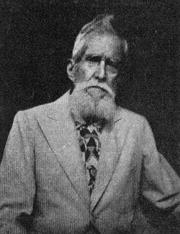
Strange Birds and Other Interesting Phenomena: The Curious Life of A. Hyatt Verrill

It was years ago when I first encountered a passing reference to this remark by Theodore Roosevelt: "It was my friend Verrill here, who really put the West Indies on the map."  My curiosity was piqued and I wrote down the name.  It seems anachronistic to think of knowing anyone who put any geographical place on the map.  I figured that anyone who could simultaneously claim to have done so, while also being friends with the often larger-than-life seeming Theodore Roosevelt, must be worth reading about.  I hoped he had perhaps a book or two that I might be able to hunt up on amazon.

As it turns out, A. Hyatt Verrill, in addition to his autobiography, Never a Dull Moment: The Autobiography of A. Hyatt Verrill, has authored 117 books and numerous works of short fiction and essays in the course of an illustrious career as zoologist, inventor, explorer, and artist.  The volume and range of interests alone is a delight to marvel at, because it zoologist-inventor-explorer-artist-author sounds like the sort of job description that only could be described as a legitimate possibility by the most imaginative and ambitious of the ten-and-under set.

Of his life, Verrill observes,  sometime around his seventieth birthday when he is penning his autobiography,  "as I look back on the many years that have passed I can truthfully say that I have lived a full life and never known a dull moment."  The remark sounds like the sort of familiar and forgivable hyperbole that is not uncommon  among people inclined to look back on all or part of their lives with some degree of nostalgic gloss. In Verrill's case, the forward to his autobiography suggests that the statement may in fact be true.

This passage from the foreword of his autobiography may illustrate why:

Verrill has discovered and described more than thirty new species of birds, reptiles, shells, and insects.  He was the first man to discover a process of natural photography and the first to photograph marine invertebrates, and insects.
He re-discivered the almost mythical Solenodon paradoxus in the Dominican republic.  He was in charge of an expedition that partially salvaged a Spanish galleon sunk in the West Indies in 1637.  He discovered and excavated the remains of a previously unknown pre-historic culture in Panama and has excavated countless tombs and ruins in South America and has lived among more than one-hundred Indian tribes in South, Central, and North America.
He has made ninety-nine trips to the West Indies and Latin America, has crossed the Atlantic eleven times, and has devoted nearly forty years to jungle and desert explorations in Central and South America.
He has built boats, voyaged on a square-rigger to the West Indies, cruised through the Antilles on a vessel once a pirate ship, has served as steward, assistant engineer and purser on West Indian cruise ships and has held a Master's Certificate.
At one time he was a member of Buffalo Bill's Wild West Show and  as an expert rifle shot, demonstrated ammunition for the Winchester Arms Company...
He has discovered and patented a refining process for sulphur and at one time developed and worked copper and gold mines in Panama.  He has collected thousands of archaeological and ethnological specimens for the Museum of the American Indian, New York City, and made a series of over one-hundred oil paintings from life of South and Central American Indians...

It goes on, but the passage above fairly gives a taste of a life that may indeed have verifiably been without a dull moment, lived from the years 1871 to 1954.  Son of prominent zoologist Addison Emery Verrill, one might say he inherited the family business.  One might also say that a certain amount of wealth certainly played a role in sponsoring the explorer's life and enough leisure time to spend documenting his perceptions of the world.  Both observations would be accurate, no doubt, but neither would be sufficient to account for the vast range of interests and the intense, careful, and lively attentions given to each over the course of his astounding life.  Its a life that amazes on two key fronts: one concerns the scope, volume, and quality of work; and the other, the way that it represents a sensibility particular to someone who came of age at a particular era, situated at a pivotal crossroads when scientific advancements and burgeoning discoveries could be embraced without the postwar disillusionment and angst that would color the sensibilities of later explorers.

Strange Birds is one volume in a series of "Strange" books, including Strange Animals and Their Stories, Strange Creatures of the Sea, Strange Customs, Manners, and Beliefs, Strange Fish and Their Stories, Strange Insects, Strange Prehistoric Animals, Strange Reptiles, and Strange Sea Shells
One of Verrill's creatively-captioned illustrations

My selection of Strange Birds came about because: 1) I was imagining a character in a story who had an unusual interaction with a bird of unusual personality, and thought  the book might offer insights (it did) and  2) It is one of only a handful of volumes available at a reasonable (sub $15) price on amazon.  Many are out of print and the price reflects this, often upwards of $50.  I have no doubt such would be money well spent, considering the richness of this volume, but the higher priced volumes are not, for the time being, in this teacher's budget.  What is most fascinating about Strange Birds - as, I assume perhaps about each volume in Verrill's considerable oevre is glimpse into the hunger of the mind, the eager strain that wishes to map the world, the type of sensibility that is capable of sustaining a narrow focus on a particular aspect of the vast wonders of the world, and holding it for as long as necessary to uncover certain mysteries that are inaccessible to the more casual observer.   The best among the living often seem to be those who can find some narrow opening into an extraordinary world and willingly submerge themselves in it at great depths.  Verrill's work represents a life of such practice, where the sustained focused is serially shifted only after each prolonged period of study.  His list of published books includes volumes on such diverse interests as knot tying, deep sea hunting, native edibles, gardening, automobile operation,  lost treasures,  pirate love stories,  "Pets for Pleasure and Profit," perfumes, radio detectives, smuggling, geology, paleontology, and a wide range of interests in particular fauna, flora, geographic regions, and civilizations. A skeptic might accurately observe that volume of work is measure only of capacity for production, and says nothing in and of itself of talent.  With this in mind, it may come as great relief to the skeptical new reader of Verrill’s work to find that he is truly a top-notch writer.  One feels while reading that one has gained access to a world that is no longer accessible in precisely the same way, in an age of constant distraction by complex demands. Close examination of any detail of life, by anyone other than the officially recognized specialist,  is arguably as important now as it ever was, but in the modern age, it can sometimes seem like a lost art.  

Verrill's life presents a brimming testimony to the power of the seeker, who never seems to abandon a child-like delight in the new worlds he encounters. Consider, for example, some of the titles and subtitles in Strange Birds:

  • How birds play hide and seek
  • Gaudy cousins of the crow (on birds and interior design)
  •  Strange birds and their nests
  • Bird pugilists
  • Birds with four feet 
  • Bower birds and decorating (featuring a tame crow named Dom Pedro and a blue jay named Sampson)
  • The bird who shaves

Or, this passage on Dom Pedro, the infant baby crow of insatiable appetite:
“How many times a day I fed that baby crow I would hesitate to state, but there are limits to even a foster parent’s patience and perseverance, and very soon I decided that it was a case for stern discipline and that my infant prodigy must be brought up to observe regular meal hours.”
This writer's confidence in his ability to accurately assess the lay of the land, and the characters of the creatures he finds within it, is something that seems almost quaint now.  I do not mean to dismiss it as such, but there is no separating the man (as scientist, writer, explorer, or otherwise) from the time in which he lived, even when his work demonstrates timeless appeal.  One cannot help but notice the childlike wonder evident in this life's work, including titles reflective of such a vast array of interests.   Its difficult for a modern reader not to wonder how someone could be so authentically motivated by a desire to map the world, while appearing to maintain an unflagging belief in his ability to do, given enough time. Where is the angst?  Where is the doubt that what one sees is really what is? Or the existential uncertainty verging on despair that come from contemplation of all that is yet unknown? If there is evidence of any of these characteristically modern sensibilities to be found in Verrill,  I have yet to notice.  

These thoughts are perhaps influenced by the fact that I have recently read Susan Sontag's 1965 essay "One Culture and the New Sensibility" in which she contemplates profound shifts in consciousness of the modern era, which call for the emergence of new artistic sensibilities in order to convey new ways of seeing.  She cites these views of inventor Buckminister Fuller, who observes how:

The Earth in infrared
In World War I, industry suddenly went from the visible to the invisible base, from the track to the trackless, from the wire to the wireless, from visible structuring to invisible structuring in alloys.  The big thing about World War I is that man went off the sensorial spectrum forever as the prime criterion of accrediting innovations ...All major advances since World War I have been in the infra and the ultrasensorial frequencies of the electromagnetic spectrum.  All the important technical affairs of men today are invisible ... The old masters, who were sensorialists, have unleashed a Pandora's box of non-sensorially controllable phenomena, which they had avoided accrediting up to that time ... Suddenly they lost their true mastery, because from then on they didn't personally understand what was going on. If you don't understand you cannot master ... Since World War I, the old masters have been extinct... 

For Verrill, it seems that his discoveries and documentation of the unknown world are always fresh and always also in the realm of that which is believed to lend itself  - given enough time -  to being efficiently charted, documented, mapped, and presented under the title of "The Boy's Book of..." (for Verrill, the "Boy's Book" volumes include guides on carpentry, whalers, buccaneers, outdoor vacations, and collecting for young naturalists, to name a few).  One wonders how long we exist as a society until we see the title "The Boy's Book of Quantum Physics" or  "The Boy's Book of Privacy Protection in the Age of the CyberHack", "The Boy's Guide to Selecting and Preparing an Ethically Raised and Sustainably Source Piece of Meat," or "The Boy's Guide to Apocalyptic Preparedness."  Different times call for different titles, and the age when one may present in all seriousness, a guide to knot tying and/ or bird-naming seems to have come and gone.  It raises the question, "What has replaced this age?"  I think that one reason that I am so fascinated by the world of A. Hyatt Verrill is that I simply do not know.  

If this strain seems cynical, let me attest to my continued amazement at those who continue to discover uncharted territories in the supposedly known world of creatures above the cellular level.  I half-suppress a giddy giggle while reading a recent New Yorker story on how an entomologist in LA (Brian Brown), after betting a friend that he could discover a new species practically anywhere, recently spent a year pitching tents in LA backyards, and subsequently discovering and naming no fewer than thirty new species of insect life.  Or the work of explorer and photographer Susan Middleton's who recently released Spineless, a stunning volume of full-color photographs of marine invertebrates, presented with a detail and artistry never before conveyed upon such species, using a technique she developed herself.  I may look longingly at simpler times, those that allowed for the development of a man such as A. Hyatt Verrill, but I would like to believe that I live at a time most conducive to the particular sensibilities that I am most highly suited to: a unified and simultaneous awe for the known and the unknowable, a desire to wrap my arms around the world that I am called to document, verging on despair that this will never, in this lifetime, be done, and morphing once again into unrelenting awe at the remarkable strain of inherited humanity that insures me that there is something worthwhile in trying anyway.  Here's to the endless exploration of all that is unknown, and to awe at the sheer depths of our shared incapacities for properly naming it, and to those perennial human inadequacies in the face of the divine that leave wonderers everywhere looking up with tingling scalps and goosebumps, whenever the night is clear enough to tempt the avid seeker to try to take it all in.

Tuesday, June 30, 2015

Questioning Infinity and Examining Spots in the Universe

Janna Levin is a Professor of Physics and Astronomy at Barnard College of Columbia University, as well as an acclaimed fiction writer and amateur artist. She has contributed to an understanding of black holes, the cosmology of extra dimensions, and gravitational waves in the shape of spacetime, and was recently named a Guggenheim Fellow.  She's received widespread praise and several awards for her recent novel A Madman Dreams of Turing Machines, based on the work of  scientist and mathematician Alan Turing, who is largely credited with invention of the computer.  I look forward to getting my hands on this book and reviewing in in the near future. This post, however, is focused on an earlier work of hers, which I encountered over a decade ago, managed to lose and forget about, and purchased again not long ago, only to have the funny feeling that I had read it before.  I am so glad I did, and here I will attempt to explain why.   

In How the Universe Got Its Spots, Levin presents her thoughts on infinity, black holes, the topology of the universe, and the highlights and pitfalls of living with a calling to map it - intertwined with concise and poignant reflections on significant developments in her personal life - in a series of letters to her mother.  These begin with her reports of moving from California to England with her boyfriend, Warren - an obsessive compulsive musician who left school at the age of fifteen and who, in addition to displaying an obvious penchant for bluegrass and triangles, is prone to nervous breakdowns upon return to his home country.  Within the first few pages Levin has touched on her wonderings about the relationship between madness and the search for truth, questions about the supposedly infinite nature of the universe (an idea she cannot abide), and the universal human tendency to “throw our vision far beyond the limitations of our eyes.”  Levin’s sensibility is unique in that she began her academic career in the field of philosophy. In her own words, Levin admits to having had "a comical stereotype of physicists memorizing things and being kinda rote... I thought philosophy was after the big questions. And It's very ironic, when I look back at my childhood, that I was absolutely mesmerized by cosmology and astronomy, even evolutionary science, ideas of natural selection. They had always captured my imagination, and with these gratifying sort of ways to think about the world.”  As Levin recalls, it was a guest speaker in a philosophy class that altered her thinking:  “Everybody in the room got very quiet... And what I was most impressed with was that philosophers didn't know how to respond. So I thought it was powerful. And I became interested in physics."  


Levin encounters infinity as “a demented concept,” a perspective that she acknowledges would be lamentable according to many of her colleagues, but, as she rebuffs, “these are my letters, my diary.”

After reading the book and listening to her speak, I cannot help but agree.  My notion of the cosmos, as a young girl situated between the figures of my grandparents in Sunday Church, and throughout over a decade and a half of of Catholic school, has always been inseparable from a the equal amount of time I spent playing scientist in notebooks and on index cards, keeping track of names for things, devising inventions, and - on one memorable afternoon that left me laid out on the dining room floor with a terrible case of vertigo - trying to devise some system for counting the number of raindrops that fell per second in a typical April storm.  Reasoning about this behavior is dubious at best, but any open-minded child with a Saturday ahead of them is prone to wonder.  And as my grandmother explained it to me on Sundays over the brunch that followed Mass, In the Beginning there was Nothing.  And then God created the Heavens and the Earth:  First there was Light, then the Moon and then the Stars.  Later came Man.  Once there was Nothing, then there was Something.  And, as far as my limited sphere of understanding had instructed me, So it Was and Ever Would be World Without End, Amen.  Which I took as my initiation into certain tendencies towards symmetry in the universe, although I never could have voiced it as such at the age of seven.   

Perhaps I had progressive teachers, or because my mother subscribed to Omni and Popular Science, or perhaps because I grew up in the age of  Pope John Paul II - who, as my grandparents and the nuns shared with me often, encouraged and fostered ongoing relationships between scientists and the Vatican, to explore common interests of cosmology, mysticism, and physics -  I grew up understanding that the thrill of scientific discovery was a cousin to the sense of awe and wonder that came from standing in the post-Eucharist silence of church, pondering deep existential questions - or else in story, or while staring up at a sky full of cloud animals, or at a blanket of stars so dense that it made my head ache with the effort of trying to absorb them all.  The ideas of science and the sensibilities of mythology and wonder, for me, have never really lived in opposition to one another (although I can relate to Levin's tendency to stereotype physicists as boring and clerkish, prior to actually knowing any).  It would be decades before I was able to voice why.  This capacity only came when I read a memorable passage by Joseph Campbell (in a context of describing how every religion is the enactment of a mythology) on the ways that science and mythology were simply different modes of explaining the same thing.  One used experiment, the other story.  

The part where it always got confusing, in both mythological and scientific modes,  was precisely the part about infinity.  If God goes on and on, I used to wonder, and the universe does too, then how can anyone really say that everything is contained within the sphere of the divine - that is, unless that which is divine is something that goes on and on endlessly and yet exists within a complete system unto itself?  

“Look,” Levin puts it, in explanation as to the ways that intuitions may sometimes be misleading, “it seems logical, once one understands the concept of velocity, and the concept of infinity, that one would be able to imagine going faster and faster by infinite degrees.”  But this concept, as Levin observes, is at odds with empirical evidence.  We do have a limit, and we reach it at the speed of light. 

All that I knew about this field prior to first reading Levin’s work over a decade ago, and aside from passing references and constant wonder, involved a few literary encounters with the work of Carl Sagan in high school, of which I mainly remembered his observation that “We are all star stuff.” Carbon, Nitrogen, Oxygen, - even space and time and gravity itself - all emerged from the big bang. Recognition that we  share a common inception makes it difficult to not to wonder if we don't also share some other common elements of fate as well. There was nothing, and then there was something, and there we all were - stars, ether, the echo of the big bang itself, the black holes, the supernovas, the peaks and valleys in the fabric of it all:  what to make of such largesse, and even if we can agree in theory on a beginning, how does anyone begin to imagine the rest of it?

One of many aspects of Levin’s thinking that is admirable and compelling:  her observation that “my faith in nature and its laws is deeper than my need for uniqueness.”  This in follow-up to her observation that, if one accepts the concept of infinity, one must also accept - by extension - the strong possibility that there are other versions of each of us out there.  Levin can “welcome the infinite in mathematics” while still maintaining that she would be “pretty shaken to find the infinite in nature.” In explanation of this seeming paradox, Levin offers this:
I don’t feel robbed living my days in the physical with its tender admission of the finite.  I still get to live with the infinite possibilities of mathematics, if only in my head.
She traces various developments in the field from Tycho Brahe, to Newton, to Max Planck, following the discoveries that led to Einstein’s game-changing theory of special relativity, and while she considers Einstein a hero (in no small part for “his defiant brilliance in the face of his own limitations,” referring to how he never allowed the clumsiness of his calculations to stop his earnest quest for large-scale theories about the laws of the universe), she recognizes - as did Einstein- that his quantum theory is ultimately incomplete.  Mulling over the field-altering discoveries that Einstein and others observed, she invites readers to reconsider the commonly acknowledged but perhaps under-appreciated revelation that space and time are relative, not absolute. This suggests curves and folds in the cosmos which had once been thought to be flat and homogenous.

Levin’s habits of mind are admirable on many levels, and one reflection of her elegant thinking may be found here:  “I try to find a simple expression for my ideas.  I figure if there is none, the ideas might be wrong.  And yet, she never shies away from asking questions that threaten to overwhelm by leading one down a virtual rabbit hole of mind-warping complexities, as when she confesses to mom:  “I’m not just wondering if spacetime is finite, I’m wondering if we can look out and see the whole thing.”

Her thinking is poignant and ripe with mystical elements, although she never abandons her commitment to the sober gaze of the scientist.  Her reach is evident in musings like this:
..we are the product of the universe and I think it can be argued that the entire cosmic code is imprinted in us.  Just as our genes carry the memory of our biological ancestors, our logic carries the memory of our cosmological ancestry.  We are not just imposing human-centric notions on a cosmos independent of us.  We are progeny of the cosmos and our ability to understand it is an inheritance.
And later, when she observes, along similar lines of thought:
There are no walls built in the human mind making some of us scientist and some of us artist.  They are branches of the same tree, rooted in a common human essence.  Maybe it’s our ability to step between the different disciplines, weaving strange loops all the while, that’s at the core of our creativity.  The drive for knowledge must be as innately human as any of our more carnal desires.  Maybe the compulsion to ask these questions is rooted in the structure of our minds.  Maybe the answers are too.
If the above may be recognized as evidence of her reach, the following may be offered as evidence that she immune from any critique of being some soft-shelled wonderer with a mystical bent who may or may not care about the precise nature of the suppositions he or she wonders about:
…the enigma of quantum mechanics tempts abuse.  People try to treat quantum mechanics as synonymous with supernatural.  But just because we don’t understand it doesn’t mean all sanity has abandoned us. We can use the predictions of this confounding theory with stunning accuracy in the tremendous colliders that particle physicists have used around the world.  It is probabilistic instead of simply deterministic, but it is still predictive and not utterly wild and random.
Other topics I’ve love to go into: the way that supernovas collapse into the bodies of neutron stars, “smaller than Manhattan spinning thousands of times per second,” the way that human eyes are precisely tuned to interpretation of the spectrum of light emitted by the sun, and a few stunning facts about black holes: how they absorb matter and energy through a vacuum that acts as “ a cut in the fabric of space..”  The way that black holes evaporate, and how before they do so, they can only be measured by examining the matter and light that they absorb (I’ll admit that here I am drawn by a strong tendency to anthropomorphize, for is it not so that the same can be said of the black holes in each of our lives? Often, we may only observe them by observing what they consume.  Certain laws of being seem to consistently prevent us from ever being able to conceive of these head-on. I realize that this hunch is neither provable nor scientifically sound, but I am an admirer rather than a practitioner of these studies, and it could be argued that, as such, I cannot help it.)

Here I’m going to try to get to the truth alluded to in the title.  Levin’s intimate and down-to-earth tone  - combined with her focus on simplicity - have the effect of imbuing the reader with a level of confidence in approaching some rudimentary description of certain theories that is utterly unearned.  (If questioned, I’m inclined to retort with, “Well, it’s like Janna said…,” which alludes to the intimacy of writer-reader relationship that is certainly a hallmark of this book’s appeal.)  This connection arrives via the strain of wonder at the unknowable and celebration of science’s quest for knowledge, that runs through all of her letters, and in which she observes how:

We live at a time  when people have the tenacity to analyze the data of telescopes, build satellites, and develop detectors that, when put together, could actually determine the fate of the whole cosmos.
Here is where she comes across, for this reader, as a kindred spirit - when she observes that “each answer I learn releases a rainfall of new questions.”

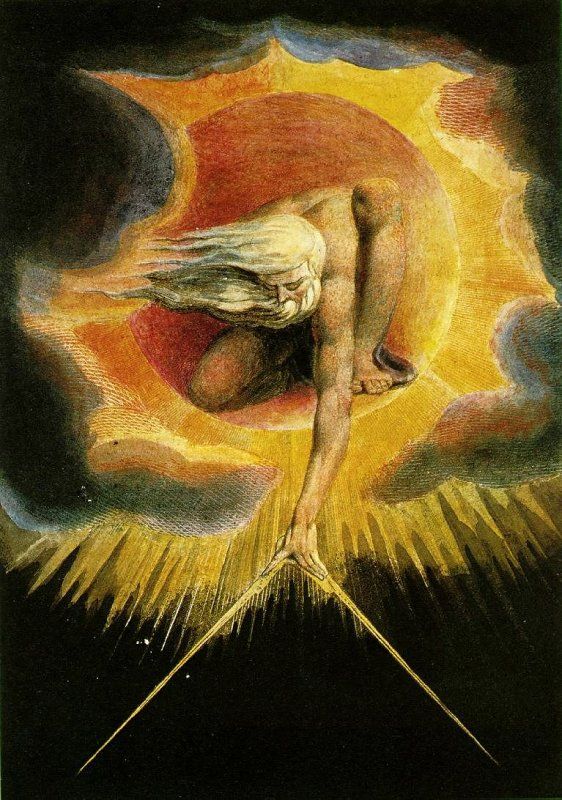
William Blake's Ancient of Days
In her contemplation of the origins of the universe, Levin observes that “the universe at its inception is smaller than a grain of salt and unfathomably dense” and my thoughts turn immediately to the writings of fellow mystic William Blake, who observed, in one well-known fragment from his “Auguries of Innocence," how innocence is reflected in a capacity "To see a world in a grain of sand/ and a Heaven in a Wildflower/ Hold Infinity in the palm of your Hand/ and Eternity in an Hour."

More fuel for thought: the echo of the big bang as measured unexpectedly (except to a few forward-thinking theorists) from New Jersey by Bell laboratories in 1967.  In order to echo, sound must have something against which it refracts.  Such a phenomenon gives strong support to Levin’s hypothesis that the universe, though “really, really big” may be finite, rather than infinite.  

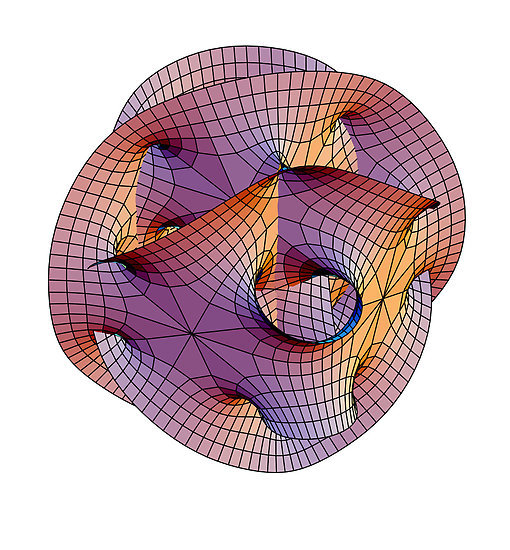
If finite, how is it shaped?  Is it a two-dimensional plane, rolled inward upon itself the way a piece of paper may roll in on itself to become a cylinder - or, if slightly more flexible like a piece of cloth, rolled inward like a cylinder and then around again so that the two ends touch, in the form of any number of elaborately curved manifolds that have been proposed as possible shapes of the space (and time) we inhabit?

Perhaps it has handles and holes.  Certain facts strongly suggest that it is much more likely that it has some sort of irregularities, in the forms of bumps and valleys, than that it is completely smooth.  One of the strongest suggestions of this comes in the form of hot and cold spots.  If the universe were infinite and expanding with equal wavelength in all directions outward from the same common point in the big bang, than it would seem to follow that the temperature of the ether would be constant and yet, it isn’t.  It is spotted in hot and cool spots, not entirely unlike the spots of a leopard, and
Model of Calabi-Yau manifold 
which beg the question: “Can we observe he extent of the universe by looking for a pattern in the universe’s spots?”  The thing that makes this significant comes from understanding that if the universe were smooth and infinite, the “light filling the cosmos would primarily ring at one wavelength, one note.” Which it seemed to do, more or less since the universe’s inception, for about 300,000 years, before developing series of small perturbations which Levin elegantly interprets as the “hills and valleys” of a melodic score.  As she observes, “If the universe is finite, the score is not just cacophony but has natural harmonics and imprinted patterns - melody.  This is what we search for.” Much of her work in the field of topography involves experimentation with models of folding dimensions, a sort of “intergalactic origami” intended to effectively catalog the possibilities of arrangement for compact spaces.

In a moment demanding of profound pause, Levin observes, “When we finally do have a TOE [Theory of Everything] that is also a quantum theory, all of our tales will have to be retold."  It raises the question, Who will the observers be, then?

Endearingly, Levin wonders at the possible uselessness of her mathematical calculations, “Should I stop staring into space… shouldn’t I be more concerned with my ordinary life?" Reading this meditation calls to mind a line from a quintessential poet of the American Northwest, Robinson Jeffers, and his meditations on the “divinely superfluous beauty” of his natural surroundings. How could anyone fully conscious of it fail to be completely transfixed? 

The storm-dances of gulls, the barking game of seals,
Over and under the ocean ...
Divinely superfluous beauty
Rules the games, presides over destinies, makes trees grow
And hills tower, waves fall.
The incredible beauty of joy
Stars with fire the joining of lips, O let our loves too
Be joined, there is not a maiden
Burns and thirsts for love
More than my blood for you, by the shore of seals while the wings
Weave like a web in the air
Divinely superfluous beauty.

 - "Divinely Superfluous Beauty" by Robinson Jeffers

"Seagull Silhouette" image provided by versageek on flickr under a creative commons license.